The evolving MGA market and the role of technology, data and AI in building the operating model for growth
Published:
Analysing the current challenges facing the growing MGA sector: retaining agility while building the technology, data and governance of a much larger business.
The Managing General Agent sector has been one of the fastest-moving parts of the insurance market over recent years. Capacity providers value MGAs for their ability to access specialist markets, respond quickly to changing risks and bring underwriting expertise that can be difficult or expensive to build in-house.
The latest MGAA Annual Report illustrates the continued momentum. MGA membership increased from 249 to 270 during the past year and the Association reports that MGAs continue to attract both risk and investment capital while strengthening their position within brokers' placement strategies.
But growth changes the challenge.
As MGAs become larger and more important to insurers' distribution strategies, expectations around underwriting performance, portfolio insight, governance and operational control increase with them. Capacity is available but it cannot be taken for granted. AM Best's latest analysis of the delegated underwriting sector points to increasing selectivity from capacity providers with greater emphasis on long-term underwriting quality and stable loss ratios.
The question therefore is not simply how MGAs continue to grow. It is whether their operating models can support that growth.
Navigating a softening market
The trading environment is becoming more competitive.
Marsh's Q2 2026 Global Insurance Market Index reported that UK commercial insurance rates fell by 8% in the second quarter, the tenth consecutive quarterly decline. UK property rates fell 11% as capacity remained plentiful and competition increased.
That puts renewed pressure on underwriting discipline and cost.
In a harder market, rising rates can provide some protection against inefficient processes and a high operating cost base. As competition increases there is less room for either. MGAs need a much clearer view of portfolio performance, greater control over acquisition and administration costs and the ability to identify deterioration quickly.
That also changes the conversation with capacity providers.
Growth alone is unlikely to be enough. MGAs increasingly need to demonstrate why their portfolios perform, how risks are being selected and priced, where claims trends are developing and how quickly the business can respond when performance changes.
Technology and data have an important role in providing that evidence.
Growth exposes weaknesses in the operating model
One of the attractions of the MGA model is agility. Smaller businesses can often move more quickly than established insurers because they have fewer legacy systems, shorter decision-making chains and more focused propositions.
The challenge comes as the business scales.
Processes that work at £50 million of premium may become difficult to sustain at £250 million. Spreadsheet-based reporting becomes harder to control. Manual bordereaux processes create more work. Different capacity providers want information in different formats. Underwriters spend increasing amounts of time moving or reconciling data rather than using it.
A recent study by Broadstone and InsTech provides a useful illustration. Based on responses from nearly 100 MGAs, it found that data preparation can account for 40 to 50% of actuarial project effort. The report also points to back-end data flows and warehousing as continuing weaknesses even within MGAs that have relatively modern underwriting and claims systems.
That is an important point.
An MGA can have modern front-end technology but still carry significant operational friction underneath it. If data has to be cleansed, reformatted or manually reconciled before it can support pricing, portfolio management or capacity reporting, the operating model will become harder and more expensive to scale.
The priority should therefore be to understand where that friction sits and remove it.

Where does AI fit?
AI clearly has a role but the market is still working out exactly where that role should be.
EIOPA's 2026 survey of 347 European insurers found that nearly two-thirds were already actively using generative AI. Most, however, remained at proof-of-concept stage. Efficiency and cost reduction were the most common motivations alongside better customer experience and decision-making.
That feels much closer to the reality of the market than some of the claims surrounding AI.
There are already practical opportunities across an MGA operating model. AI can support submission ingestion, document extraction, underwriting research, portfolio analysis, claims triage, broker servicing and administrative workflows.
But the starting point should be the problem rather than the technology.
Where are underwriters spending time on activity that adds little value? Where is information being re-keyed? Where are decisions being delayed because data is difficult to find? Where is reporting to capacity partners overly manual? Where are operational teams repeatedly correcting the same problems?
Those are much better places to start.
The wider insurance market also provides a useful warning. A large number of organisations have experimented with AI but embedding it into day-to-day operations has proved harder. Data quality, system integration, governance, ownership and changing the way people work remain significant constraints.
For MGAs, this matters because a series of disconnected AI pilots could simply create another layer of technology around an already fragmented operating model.

Data becomes more important as MGAs grow
Perhaps the most important investment is less fashionable than AI.
It is data.
Capacity providers increasingly expect MGAs to provide sophisticated analysis of underwriting performance, claims development and portfolio trends. Broadstone's research suggests that analytics capability becomes much more developed as MGAs grow with mid-sized firms increasingly building dedicated actuarial and data teams.
This changes the relationship between the MGA and its capacity partners.
Good data allows both sides to have a more informed conversation about pricing, exposure, claims development and portfolio strategy. It makes it easier to identify deterioration before it becomes a problem. It can also give an MGA more control over its own intellectual property and a clearer understanding of what is driving performance.
Poor data does the opposite.
It creates dependency on manual reporting, makes performance harder to explain and reduces the ability of an MGA to respond quickly when market conditions change.
This is why data architecture, ownership and governance need to be treated as part of the business model rather than simply as technology issues.
Technology still depends on people
None of this works without the people running the business.
Underwriters need to trust the information they are being given. Operations teams need to understand why processes are changing. Technology teams need to understand how the business actually works. Senior leaders need to be clear about which problems they are trying to solve.
That sounds straightforward but it is often where transformation becomes difficult.
A new underwriting platform will achieve little if users continue working outside it. Automated workflows will disappoint if exceptions are poorly understood. Better data will not improve decisions if ownership of that data remains unclear.
Successful change therefore needs involvement from the people closest to the work. Underwriters and operational teams should help define problems, challenge proposed solutions and shape how new tools are incorporated into day-to-day activity.
That is particularly important with AI. The technology may change quickly but underwriting accountability does not disappear with it.
Building an operating model that can grow
The MGA sector has an important opportunity.
It has many of the characteristics that should make change easier: specialist businesses, entrepreneurial leadership, closer relationships between underwriting and operations and in many cases less legacy technology than established carriers.
But those advantages can disappear as organisations grow.
The challenge is to retain the agility of the MGA model while putting in place the technology, data, governance and operational discipline needed to run a larger business.
That means asking some fairly practical questions.
Where is manual work limiting growth? Which data really matters to underwriting and capacity partners? Which processes should be standardised? Where can automation remove unnecessary administration? Where could AI genuinely help? Which capabilities should sit inside the MGA and which are better provided by partners?
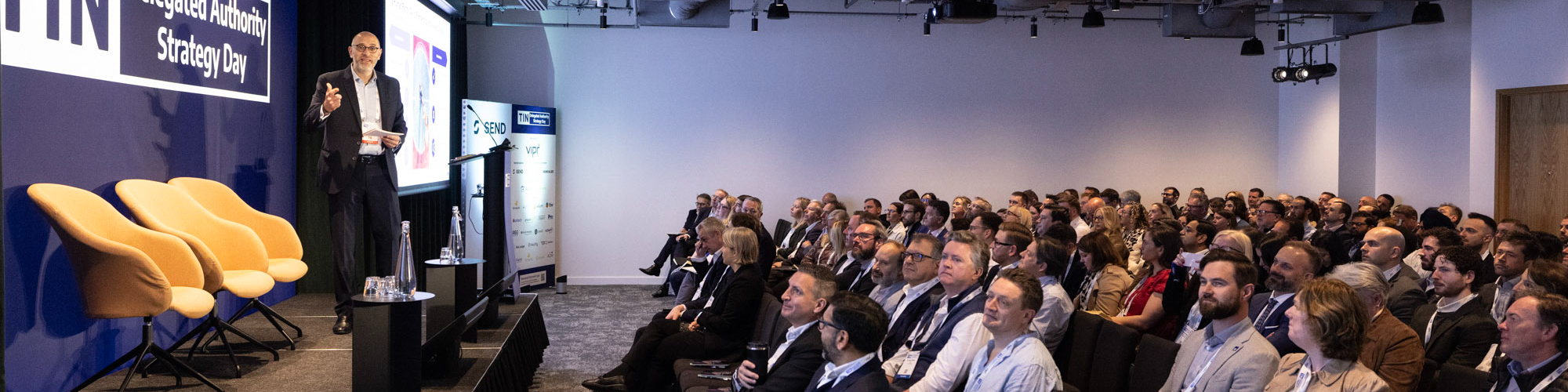
These are the conversations we will be having at our upcoming Delegated Authority Strategy Day, bringing together senior leaders from across the delegated authority market to share how they are approaching growth, operating model change, data, technology and AI.
The MGA market is continuing to grow. The more interesting question now is how the operating models behind that growth need to evolve.
Sign Up to TINsights
Where we share our latest blogs, industry reports and insights