Four themes that will define the next phase of data and AI in insurance
Published:
Four themes that will define the next phase of data and AI in insurance
If last year’s TINtech discussions showed anything, it is that the conversation has moved on.
There is no shortage of technology. AI is being deployed. Data platforms are in place. Digital programmes are well underway. And yet, the industry is still wrestling with how to turn all of that into meaningful change.
From the research for this year’s TINtech Data Jam taking place on June 16th four themes consistently emerged. These are not new ideas, but the level of urgency around them has shifted. Together, they frame what the next phase of transformation needs to look like.
1. Moving from AI experimentation to operational scale
One of the clearest tensions is between activity and impact.
There is a huge amount of AI experimentation taking place across the industry. But the challenge is moving beyond isolated use cases into something that genuinely shifts how the business operates.
A useful way this was framed is the idea that many organisations are still “nibbling” at processes. Small interventions, small efficiencies, small wins. Valuable, but not transformational.
The next phase is very different. It is about redesigning entire processes around AI and automation, rather than inserting AI into existing workflows.
There were practical examples from the focus groups of what early scale looks like:
- Call summarisation rolled out across multiple business units, delivering measurable savings through reduced handling time
- AI-assisted underwriting guidance, improving decision quality and reducing leakage
- Automated complaint letter generation, cutting drafting time by around 40% while improving consistency
Individually, these are incremental. But the shift comes when they are built once, scaled across the organisation and reused as part of a broader architecture.
The real ambition goes further. Reimagining processes so they are led by computer intelligence, with humans stepping in where judgement is required. That is a fundamentally different operating model.

2. Data as the constraint, not the enabler
AI may be the headline, but data remains the limiting factor.
There is still a persistent issue around fragmentation, ownership and usability. Even with modern platforms, many organisations struggle to connect data flows across underwriting, claims, distribution and operations.
A particularly important point raised during the research was ownership. Data governance only works when it sits with the people who create and use the data, not when it is abstracted into a central function.
This is not just a governance issue. It directly impacts outcomes:
Inconsistent data slows down automation
Poor data quality limits AI effectiveness
Lack of integration creates friction across the value chain
At the same time, there are examples of how better data usage is already improving outcomes:
Using enriched property data to identify underinsurance at the point of quote, rather than at claim
Proactively flagging risks like outdated valuations to avoid disputes later
Structuring unstructured data, such as documents and submissions, to enable straight-through processing
The opportunity is clear. If insurers can reliably capture, structure and connect data across the lifecycle, they can fundamentally change both efficiency and service.
[Advert-8]
3. Redesigning processes, not just digitising them
Many current processes were designed for humans, supported by systems.
That assumption is now being challenged.
The shift underway is towards processes designed for machines to execute, with humans augmenting where necessary. This is a subtle but important distinction.
A good example discussed was the handling of documents. Insurance is still heavily reliant on unstructured information. Submissions, reports, correspondence. Much of the work is effectively “moving paper around”.
The emerging approach is to:
Extract data automatically from documents
Route it into operational systems or data platforms
Trigger downstream processes without manual intervention
Similarly, in claims, there are examples where multiple steps can be automated end-to-end. Extracting features from reports, feeding models, generating recommendations. Today, these steps often require human intervention between each stage. The direction of travel is towards orchestrated, agent-led workflows.
This is where concepts like agentic AI begin to matter. Not as a buzzword, but as a way to coordinate multiple tasks into a single, continuous process.
The implication is clear. Efficiency gains will not come from doing the same things faster. They will come from doing them differently.
4. The human factor is still the hardest part
Despite all the focus on technology and data, the biggest barrier to change remains people.
There were several recurring themes here.
First, clarity of purpose. Transformations fail when the “why” is not clearly articulated. Leaders need to be explicit about what they are trying to achieve, whether that is efficiency, growth, improved service, or even responding to existential threats.
Second, involvement. The most successful initiatives are built with the business, not delivered to it. Many of the strongest AI use cases have come directly from frontline teams experimenting with tools and identifying opportunities.
Third, credibility. Change needs to be driven by people who are respected within the business. Not just technically capable, but trusted by their peers to represent real needs.
And finally, honesty. Transformation is rarely a smooth journey. There is always a “messy middle” where things feel worse before they get better. Acknowledging that upfront helps maintain momentum.
There is also a broader shift underway. Technology is becoming more accessible. People are using AI tools outside of work. That familiarity is starting to break down resistance and create a more open environment for change.
Where this leads
Taken together, these themes point to a more fundamental shift.
The industry is moving from:
Digital projects to data-driven operations
Isolated AI use cases to integrated, end-to-end processes
Technology-led change to business-led transformation
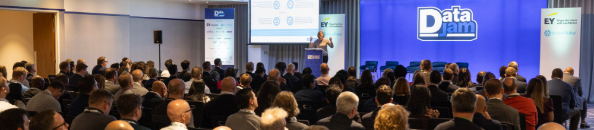
TINtech Data Jam on June 16th will explore these challenges in more depth, focusing on how insurers and brokers can move from experimentation to execution and from capability to measurable business value.
The question is no longer whether the technology works.
It is whether organisations are ready to rethink how they operate.

Sign Up to TINsights
Where we share our latest blogs, industry reports and insights