Six key reflections from London Market Claims
~ Jeremy Burgess, The Insurance Network
From scaling AI to rethinking the role of claims, what did we learn about the priorities for the London market claims?
London Market Claims took place last week (6th Oct 2026), bringing together claims professionals from across the market to discuss the challenges and opportunities facing the sector.
One thing was apparent throughout the day. There is no shortage of ambition or investment in technology, particularly AI and automation. However, there are some difficult questions about how we implement change, redesign operating models and ensure that claims plays a more influential role in the wider business.
Our pre-event survey provided an interesting starting point highlighting tensions between ambition and organisational readiness. These findings were reflected in many of the discussions during the day.
Here are my six key reflections.
1. Scaling AI requires more than successful pilots
There was plenty of discussion about where AI is already being deployed, from claims data ingestion and document processing to extracting information from unstructured data.
The challenge now is integrating these capabilities into everyday claims operations rather than creating another collection of disconnected solutions.
As one delegate put it in our pre-event survey:
"How can we successfully scale AI and automation across the claims lifecycle to improve efficiency, whilst maintaining customer service and trust whilst also ensuring appropriate governance and human oversight?"
That question captures several challenges. Organisations need to prioritise the right applications, integrate them with existing systems, establish clear accountability and demonstrate measurable improvements.
The technology is moving quickly. The ability of organisations to implement and manage it consistently remains a significant constraint.

2. We need to rethink the claims operating model, not simply automate existing processes
One of the most challenging questions raised in the pre-event survey was:
"Should we be looking at process (re)design only or really changing the operating model"
It is an important distinction because if AI removes significant amounts of administrative work, should organisations simply process more claims with the same operating model? Or should they fundamentally reconsider how claims are managed, where specialist human expertise is deployed and which activities should be automated, retained or outsourced?
The closing panel challenged the continued use of experienced claims professionals to manage high volumes of relatively straightforward, low-value claims.
As more of that work becomes automated, claims teams have an opportunity to devote greater attention to complex losses, portfolio analysis and client relationships.
However, this requires changes to roles, responsibilities, workflows and performance measures.
The survey highlighted the scale of the challenge. Although 54% considered operating model redesign a high or critical priority, only 11% believed their organisations had already completed the cultural changes needed for a more digitally enabled market.

3. Claims data could have a much greater influence on underwriting performance
This was one of the strongest themes from the day.
Claims files contain enormous amounts of information about loss causes, coverage issues, emerging risks and how policies respond when tested.
Much of that information remains buried in documents, emails and individual claims files.
We heard examples of organisations beginning to extract and analyse this information to identify loss trends, assess portfolio performance and improve underwriting decisions.
One particularly interesting example involved using historical claims data to identify patterns within a specific property portfolio. Those insights could then inform pricing, policy wordings, attachment points or decisions about whether to continue underwriting particular risks.
The discussions during the interactive round tables also challenged the assumption that all claims data needs to be perfect before it can be useful. New technology can help extract and structure information from existing claims files, although the accuracy of the resulting analysis still needs to be checked.
The opportunity is considerable, but claims teams need to work more closely with underwriting and pricing colleagues to turn these insights into decisions.
It also raises an important question: How should we measure the contribution of claims to underwriting profitability and loss ratio performance?
4. Better data is only useful if it changes decisions
Data quality, fragmented systems and a lack of data standards remain familiar problems across the London market.
Our survey highlighted particular frustrations with historic claims data, bordereaux quality, reconciliation and information spread across disconnected systems.
However, some of the practical examples discussed during the day showed what can be achieved without waiting for wholesale systems replacement.
These included improving delegated claims bordereaux data to enable more detailed analysis of coverholder performance and consolidating information from complex claims to identify recurring coverage issues and benchmark carrier performance.
The important point is what happens next.
- Can the information help identify claims leakage?
- Can it expose poor-performing portfolios?
- Can it improve reserving or inform changes to policy wordings?
- Can it help clients make better decisions about risk?
Producing better dashboards is useful, but the real test is whether the information leads to different decisions and better results.
5. The future claims professional will need a broader range of skills
AI and automation will change the work undertaken by claims teams, particularly as administrative and transactional activities are reduced.
Over the course of the day delegates explored what this means for the skills required over the next three to five years.
Technical claims expertise and judgement will remain essential, particularly for complex losses, coverage interpretation and negotiations.
However, claims professionals will increasingly need to understand data, use AI tools effectively, identify patterns across portfolios and communicate insights to underwriting teams and clients.
One challenge is finding people who combine these capabilities.
A highly experienced claims professional may understand the significance of an AI-generated analysis but need support with the technology. A data analyst may have excellent technical skills but lack the claims experience to recognise an incorrect conclusion.
Developing existing claims professionals and bringing together technical, data and technology expertise will therefore be increasingly important.
There was also concern about developing the next generation of claims directors. As the role becomes more strategic, organisations need to provide emerging talent with exposure to wider business decisions, client relationships and executive responsibilities.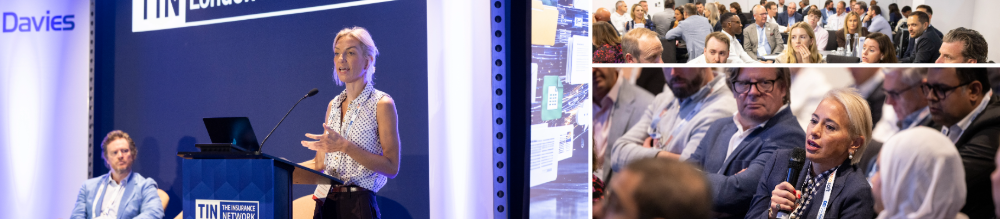
6. What will we actually do with the time saved through automation?
This was one of the most thought-provoking questions of the day.
We frequently hear about AI reducing processing times, eliminating manual work and improving productivity.
But what happens to the time saved?
One example discussed during the closing panel was the importance of challenging employees to explain how they will use the time released through automation.
- Will they spend more time with clients?
- Investigate emerging risks?
- Develop their technical knowledge?
- Mentor junior colleagues?
- Analyse claims trends to improve underwriting decisions?
These activities are harder to measure than the number of claims processed, but they could make a significant difference to client service and business performance.
It also challenges how we currently measure claims performance.
As one delegate asked in the pre-event survey:
"We've become very good at measuring how quickly we process a claim, but are we measuring whether we delivered the best outcome for the client."
Perhaps that is one of the most important questions claims directors should be asking.
Turning discussion into action
We ended the conference by asking the closing panellists to identify one action claims directors should take in the next 90 days.
Their suggestions were practical:
- Revisit the claims strategy for the next three years and challenge whether it is sufficiently ambitious.
- Accelerate the implementation of existing AI initiatives rather than continually launching new pilots.
- Select a specific claims portfolio, use the available data to identify insights and demonstrate how those findings can improve underwriting decisions.
I thought these were useful ways to conclude the day.
There is clearly an appetite for change across the London Market, but organisations are moving at different speeds and face different challenges.
The test over the next 12 months will be whether we can demonstrate progress in improving claims performance, developing our people and using claims expertise to influence decisions across the wider business.
Sign Up to TINsights
Where we share our latest blogs, industry reports and insights