Breakfast briefing | Attendee insights and discussion takeaways
Ahead of the briefing, we asked attendees whether rapid advances in AI create a genuine opportunity to transform the London market operating model and what they see as the biggest barriers to successful change. The responses provide a useful snapshot of the priorities and practical concerns facing the market.
The questions we asked
1. Do you think that the rapid development of AI tools creates a real opportunity to transform the operating model, or is it still hype?
2. What’s the biggest blocker to delivering successful change within London market operations?
What the responses tell us
All seven respondents to the first question saw AI as a genuine opportunity, but qualified that optimism. They pointed to potential improvements in underwriting, claims, document processing, bordereaux management, data analysis and operational decision support. The common concern was whether organisations have the data, processes, technology and governance to deploy these capabilities effectively.
Several respondents argued that AI should accelerate wider operational change, rather than be layered onto existing inefficiencies. They also highlighted the importance of clear accountability, human oversight and practical controls in a regulated environment.
The biggest barriers to change 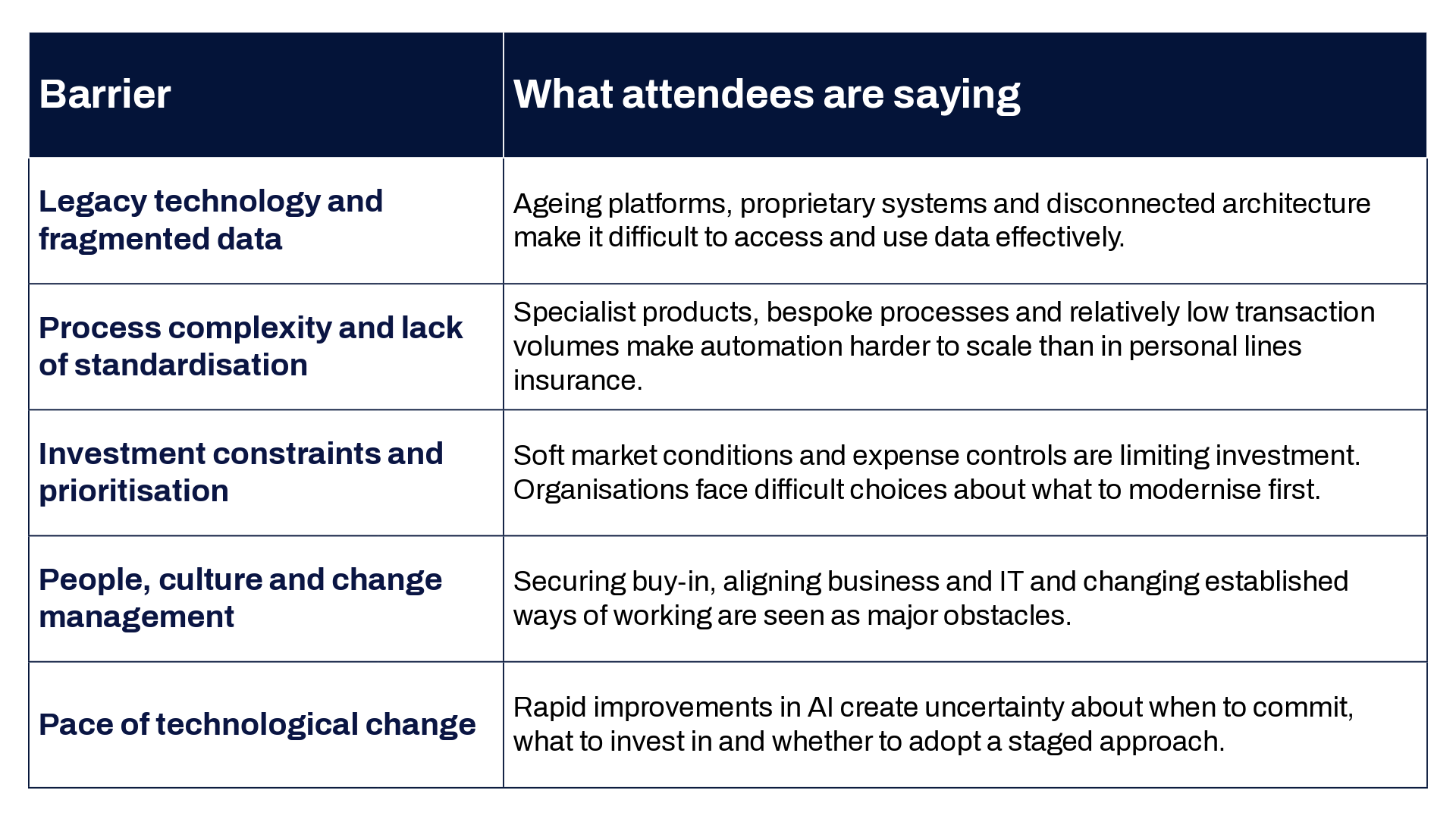
In attendees’ own words
“AI is not a substitute for fixing fragmented processes, poor data quality or legacy technology estates.”
“The biggest blocker is a lack of standardisation. The specialist nature of London market products has driven countless process variations over time.”
“For me the biggest blocker is change management. New tools and operating models only succeed if people understand the case for change and are brought along with it.”
Questions worth taking back to your organisation
- Are we investing in AI before resolving the data and process issues that limit its effectiveness?
- Where would process standardisation improve efficiency without compromising the specialist nature of our business?
- Should we modernise legacy platforms first, or use targeted AI deployments to accelerate change?
- How do we secure business and IT alignment, ownership and the skills needed for adoption?
- What controls and performance measures will demonstrate that new capabilities are delivering improvements?
The central challenge is deciding where to start and how to sequence change. With AI developing quickly and investment under pressure, firms need to make progress without creating further complexity or technical debt.

Sign Up to TINsights
Where we share our latest blogs, industry reports and insights