The next challenge for AI adoption is bringing the workforce with you
Published:
As organisations move from experimenting with AI to embedding it in everyday operations, the focus is increasingly shifting towards the people, skills and working practices needed to make it successful.
PwC recently announced that it will put more than 85,000 employees and partners through a certification programme in critical thinking and judgement as AI takes on more of their day-to-day work.
I think this is an interesting development and one that has particular relevance for the insurance market.
Much of the discussion around AI adoption has understandably focused on the technology itself. Organisations are exploring where AI can improve productivity, automate manual activities and help employees make better decisions.
But as AI becomes more established across business operations, another important question is emerging. How do organisations ensure their people have the skills, confidence and judgement to use these new capabilities effectively?
The PwC announcement is one example of how large organisations are beginning to address this challenge. Other initiatives from financial services and professional services firms suggest that the approach to workforce development is changing.
And there are some useful lessons for insurers and brokers looking to move AI beyond experimentation.

Developing human judgement alongside AI capabilities
PwC's new Critical Thinking and Judgment Certificate programme is particularly interesting because it is not primarily about teaching employees how to use AI tools.
Instead, it focuses on their ability to evaluate information, challenge assumptions and make informed decisions (sound familiar to underwriters and claims folk?).
The programme, which begins in December 2026, will combine practical simulations, masterclasses and workplace tools to help employees develop these capabilities.
PwC has recognised that as AI takes over more routine research, analysis and drafting activities, it also changes how professionals develop their expertise.
Traditionally, much of that experience has been gained by doing the work, reviewing information, identifying problems and learning from mistakes.
If AI increasingly performs these activities, organisations need to consider how employees will develop the judgement required to question its outputs.
This has obvious implications for insurance and it is often where I hear a lot of the push back (and fear) around adoption of this technology.
Underwriters develop expertise through assessing risks, negotiating terms and understanding how decisions affect portfolio performance. Claims professionals build their judgement through investigating losses, interpreting policy wordings and resolving complex claims.
AI can support many of these activities, but there is a risk that reducing the amount of work people undertake themselves could also reduce the opportunities to develop their expertise.
The challenge is not simply keeping humans involved in decisions. It is ensuring they have sufficient knowledge and experience to exercise meaningful judgement.

Making AI adoption everyone's responsibility
Another interesting example comes from BNY, the global financial services company, which has taken a comprehensive approach to developing AI capabilities across its workforce.
According to a Microsoft case study published in September 2026, BNY has trained its entire workforce of nearly 50,000 employees on its internal AI platform, Eliza.
The programme involved approximately 400,000 hours of training, with different learning pathways and a network of internal AI advocates helping employees understand how the technology could support their work.
What I find particularly interesting is that the programme was designed around the wider business rather than being limited to technology specialists.
Employees were encouraged to identify opportunities to improve processes and develop practical use cases.
BNY reports that its employees have generated 4,000 ideas for AI initiatives over two years, with more than 300 use cases in production.
Clearly, training alone doesn't explain these results, but it demonstrates the potential of involving employees directly in identifying where AI can make a difference.
For the London market, there is a useful lesson here as we often discuss AI transformation in terms of technology investment, centralised programmes and specialist teams. But the people who understand the operational problems are frequently those working in underwriting, claims, broking and support functions every day.
Giving these employees the opportunity to explore AI, identify inefficiencies and contribute to the development of solutions could be just as important as the technology itself.

Making AI adoption part of everyday working practices
EY provides another interesting example of how organisations are approaching the challenge of embedding AI across their workforce.
Rather than treating AI as a standalone technology initiative, EY has combined investment in its internal AI platform, EYQ, with an extensive programme of workforce development and organisational change.
The scale of the initiative is significant. EY has reported more than two million hours of AI learning, over 115,000 AI badges completed or initiated and adoption of its internal AI platform exceeding 81%.
But what interests me is not simply the scale of the training programme. It's how EY has approached the relationship between developing skills and changing the way people work.
Employees have been encouraged to experiment with AI, identify practical applications and integrate the technology into their everyday activities. The organisation has also invested in leadership engagement and communication to help employees understand the opportunities and implications of AI.
EY's experience also highlights the importance of focusing investment. Having identified more than 800 potential AI use cases, the organisation narrowed these down to 20 priority opportunities.
So providing employees with access to AI tools and delivering training is relatively straightforward. Getting people to use those capabilities consistently, identify opportunities to improve processes and change established working practices is considerably more challenging.
It requires business leaders to take ownership of adoption, employees to understand where the technology can help them and organisations to create an environment where people are encouraged to experiment and learn.
For insurers and brokers, this suggests that successful AI adoption will depend as much on how organisations manage change as on the technology they choose.

What does this mean for the London market?
Through our roundtables and research conversations with London market participants, we've seen the discussion around AI evolve considerably.
Initially, much of the focus was on identifying potential applications and understanding what the technology could do.
Increasingly, the conversation is about how to move AI into production, integrate it into existing operations and demonstrate a return on investment.
But alongside the familiar challenges of legacy technology, data quality and governance, there is a growing need to consider how organisations prepare their people for new ways of working.
I think there are four areas that deserve greater attention.
- Developing expertise in an AI-enabled environment. If junior employees spend less time undertaking the analytical and administrative work that traditionally helped them learn, how will they develop the experience required to make more complex decisions?
- Giving employees greater ownership of change. Are organisations creating opportunities for underwriting, claims and operational teams to identify where AI can improve their work, or is adoption largely being driven by central technology functions?
- Building confidence and trust. Employees need to understand both the capabilities and limitations of AI. That includes knowing when to rely on its outputs, when to challenge them and when human intervention is essential.
- Changing processes rather than simply introducing tools. AI adoption will deliver more substantial benefits when organisations reconsider how work is undertaken, where decisions are made and how people and technology can work together.
These challenges become even more important as organisations explore agentic AI and the prospect of technology undertaking increasingly complex activities with less direct human involvement.
It raises questions about how roles will evolve, where accountability will sit and what skills the workforce will need over the next three to five years.
Technology investment needs to be matched by investment in people
The examples from PwC, BNY and EY demonstrate that organisations are beginning to take a more structured approach to preparing their workforces for AI.
They are investing in skills that complement automation, encouraging employees to identify opportunities and providing support to help new technology become part of everyday working practices.
Of course, these initiatives are at different stages and the longer-term impact on productivity and business performance will take time to establish.
For the London Market, which depends heavily on specialist knowledge, relationships and professional judgement, there is a particular need to think carefully about how these capabilities will be developed and maintained as technology changes the nature of work.
We have spent considerable time discussing what AI could do for our organisations.
Perhaps we now need to spend more time discussing what our organisations need to do to make AI successful.
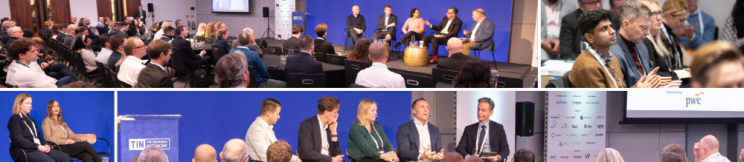
On the agenda for TINtech London Market on 9th February 2027, the relationship between technology investment, operating model change and workforce capability is featured as an important area for discussion.
The market has significant opportunities to improve efficiency and client service through AI. Making the most of them will depend not only on deploying the right technology but also on ensuring people have the skills and opportunity to use it effectively.
Find out more about TINtech London Market 2027
Sign Up to TINsights
Where we share our latest blogs, industry reports and insights