Common ground, shared priorities and the challenges still to solve
If there was one message that came through consistently at TINtech Data Jam 2026, it was that the conversation around data and AI has matured.
Throughout the event, leaders from across the insurance industry shared their experiences, successes and lessons learned. While perspectives varied, there was remarkable alignment on the opportunities ahead and the obstacles that continue to slow progress.
Below I have compiled a selection of LinkedIn reflections that capture the themes that surfaced repeatedly across the keynotes, presentations, panel discussions and workshops. They highlight both the areas where the industry appears to have reached consensus and the practical challenges that organisations are still working to overcome.
Thank you to everyone who contributed to the discussions and helped make this year's TINtech Data Jam such a valuable exchange of ideas.
For more insights from the events, interviews with speakers and session summaries, sign up to our weekly LinkedIn newsletter.
~Jeremy
.png)
The foundations of a data-driven organisation

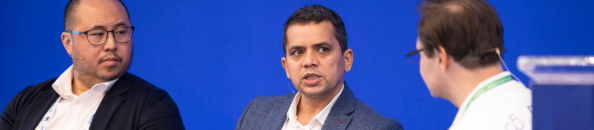
Really enjoyed being at #DataJam2026 earlier this week—great to see leaders from across the insurance industry coming together to exchange ideas, explore innovation, and challenge how we think about the future of data and technology.
A big thank you to TINtech and Jeremy Burgess for the opportunity to share perspectives on what truly defines a data-driven organisation—moving beyond tools to mindset, governance, and culture.
My top 5 reflections from my session with Charles Whatling and Aron Tai:
1) Data transformation requires discipline, dedication, and consistency—it’s a marathon, not a sprint
2) Trust must be earned through evidence—demonstrate value and reliability every day
3) Governance shouldn't be a constraint; it’s about empowering people to confidently use and explore data
4) AI and technology alone won’t fix data challenges—foundations matter
5) True impact comes from embedding data into decision-making and operational efficiency, shifting from intuition-led to evidence-based outcomes
Building trust in AI

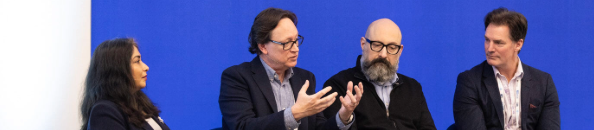
It was a privilege to be part of the panel discussion on Bias, Ethics and Governance in the Age of AI at #TINtech #Datajam 2026 alongside Chris Collings (Amplifi (Europe) and Mark Blake (Stibo Systems).
One theme stood out throughout the discussion: the challenge is no longer building AI, it is building trust in AI.
The conversation is increasingly shifting from “Can AI do this?” to “Should AI do this, and who is accountable when it does?”
There was strong engagement throughout the session, with valuable perspectives shared on trusted data, accountability, human oversight and the practical realities of scaling AI across the enterprise.
Thank you to Jeremy Burgess, Phil Middleton and The Insurance Network for bringing together such a diverse group of leaders and practitioners for an open and thought-provoking discussion.
_1.png)
Moving from experimentation to practical AI adoption

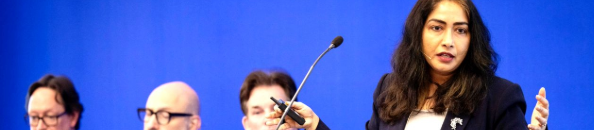
It was a great TINtech Data Jam conference this year.
I really enjoyed meeting a lot of enthusiastic folks and also talking on stage and being on the Agentic AI panel.
Hope my advice was useful and helpful - and others can begin to unlock the potential of strategic and sensible uses of AI.
A big thanks to Jeremy Burgess and the #TINtechDataJam team for organising such a great event too.
Building AI foundations for long-term flexibility

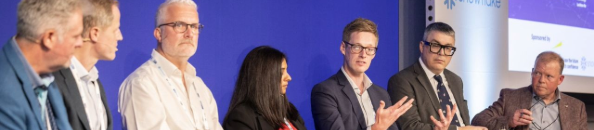
At The Insurance Network TINtech Data Jam 2026, sharing how Mosaic Insurance is building the AI foundations that allow us to scale our AI capabilities without locking in to today's tech - while keeping our unit economics sensible, and our architecture aligned to our unique business model.
Thanks to the sharp panel and room that made this such an enjoyable session.
Technological transformation in insurance

Technology alone isn't enough to transform insurance. It's how we connect systems, data and people that determines how effective our new solutions will be.
Thank you to The Insurance Network for hosting another excellent TINtech Data Jam, where Alex McBride joined Richard Inman, Paolo Cuomo and Nidhi Howell to discuss how we move beyond digital transformation to truly connected insurance.
From AI and real-time decision-making to data architecture and collaboration, the conversation highlighted both the opportunities and importance of building technology that works seamlessly for people and businesses alike.
Sign Up to TINsights
Where we share our latest blogs, industry reports and insights