TINtech London Market 2026: The themes the market agrees on and the hard parts we are still wrestling with
Published:
Insights and reflections from TINtech London Market on 3rd February.
Conversations at TINtech London Market this week revealed something interesting.
There is very little disagreement about what needs to change in the London market. Legacy complexity. Fragmented data. Slow decisions. Pressure from facilitisation, digital distribution and AI. The direction of travel is widely understood.
What is far less clear is how to change without recreating the same problems under a new label.
Drawing on insights gained from the sessions I participated in, and a number of LinkedIn posts offering reflections from attendees, a consistent set of themes emerged.
Below is a quick summary of the key themes as well as the LinkedIn posts in question. At the end of the newsletter are the links to the LinkedIn posts.
Thanks again to all those that participated as speakers, panellists and delegates.
~Jeremy

Data is still the foundation, but we are talking about it differently now
Executive summary
This was not another generic call for “better data”.The emphasis was on data ownership, data flow and data hygiene. Several speakers and attendees noted that data is often treated as something to admire rather than something that must move cleanly end to end through the operating model.
Until that happens, AI will amplify inconsistency as much as insight.
As highlighted by Christian Kitchen and Natalie Botha from Marsh, progress starts with someone taking responsibility. Clear ownership. Clear mission. Clear runway. Not grand programmes.
There was also a strong sense that “messy data is better than no data”, because action and iteration beats analysis and delay.
LinkedIn Reflections | James Grafton – TINtech London Market 2026 reflections
TINTech 2026 showed that the London Market largely agrees on what needs to change: legacy complexity, fragmented data, slower decisions, and growing pressure from facilitation, AI, and digital distribution.
What’s less clear is how we change without recreating the same problems under a new label.
The clearest signal was that technology is no longer the hard part. The tools exist. AI capability is accelerating. Where progress stalls is the operating model around the technology: ownership, incentives, governance, and decision flow.
Data came up repeatedly, but often in the wrong frame. Data is a commodity to be refined, not an asset to be admired. Until it flows cleanly end to end, AI will amplify inconsistency as much as insight. And context won’t be solved centrally. Context emerges at the point of decision, not in a platform.
What was mostly missing is boundary discipline. The real challenge isn’t removing risk or uncertainty, but holding them explicitly where they belong. Good governance should protect flow and decision quality, not approve activity or suppress ambiguity.
Facilitation models and algorithmic underwriting are exposing this tension. They demand speed, trust, and portfolio-level judgement. Faster delivery doesn’t improve outcomes if decision quality is unchanged.
TINtech 2026 didn’t reveal a lack of vision. It revealed that execution, coherence, and discipline are now the real differentiators.
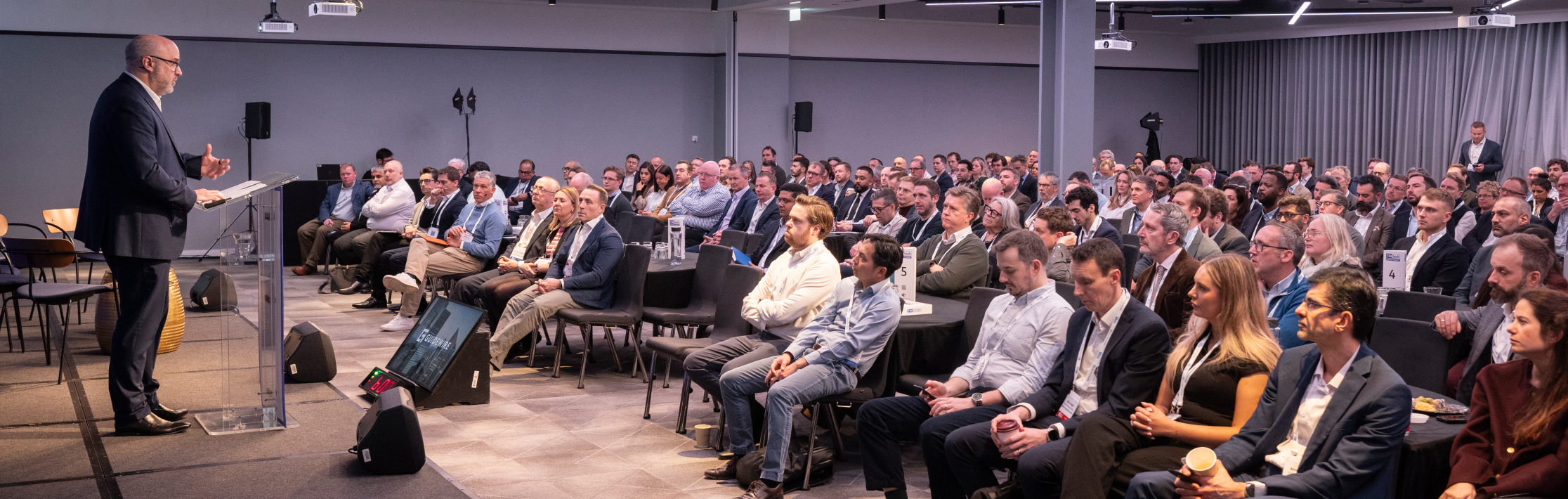
Technology is no longer the constraint. The operating model is.
Executive summary
A recurring reflection was that the tools now exist. Cloud platforms. AI capability. Integration patterns. None of these are the real barrier any more.
What slows progress is governance, incentives, decision flow and the way teams are structured.
As one attendee put it, you would not try to run Netflix on a VHS player. Modern capabilities cannot sit on top of outdated operating models and still be expected to work.
Speakers including Wojciech Korobacz, Amit Dixit from Sompo and Alan Marshall from Arch Insurance International highlighted a familiar pattern. Modernisation is still too often treated as an IT project. Data migration is complex and underestimated. Custom builds are created without the maturity to sustain them.
The result is that organisations accidentally build tomorrow’s legacy while trying to escape yesterday’s.
LinkedIn Reflections | Sollers Consulting – Data ownership, cloud modernisation and legacy pitfalls
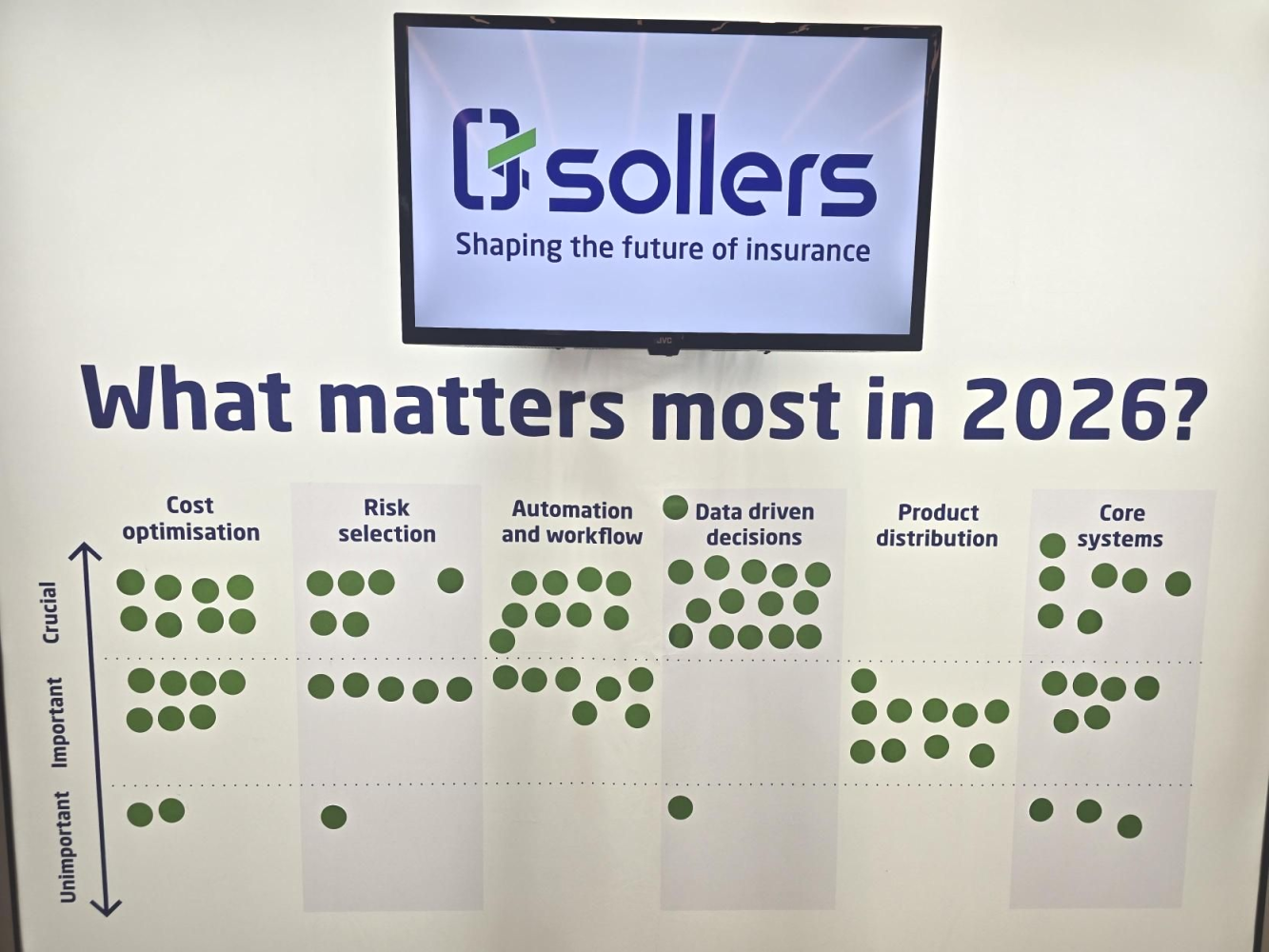
Our main takeaway from #TINtech London Market – echoed by the sea of green dots on our interactive board – is unmistakable: good data management and high‑quality data matter more than ever.
From Christian Kitchen reminding us how rarely someone raises their hand to take responsibility, to Natalie Botha (both from Marsh Risk) highlighting that even messy data is better than none, the message was consistent: progress starts with action, not talk.
Carys Lawton-Bryce (Markel International) pushed the vision further – a future where we meet at TINtech 2031 and don’t have to talk about data at all. That would be true transformation.
Cloud modernisation stories from Ian Fantozzi (QBE Insurance) showed the tangible benefits of moving core systems to the cloud: agility, scalability, cost efficiency, and stronger security.
Our own Darren Sharp led a candid discussion on Bordereaux and Delegated Authority challenges – many of which the market still handles like it’s 2005.
And in a packed legacy transformation session, Wojciech Korobacz, Amit Dixit (Sompo) and Alan Marshall (Arch Insurance International) unpacked the pitfalls we keep repeating: treating modernisation as an IT project, underestimating data migration, and building custom systems without the maturity to support them.
Across the event, one theme dominated: data quality and ownership will shape the next decade of the #LondonMarket.
And yes – our dot‑voting wall on “What matters most in 2026?” sparked more debate than expected. Sometimes the simplest ideas get people talking.
Facilitisation and algorithmic underwriting are raising the bar
Executive Summary
Sessions on facilitisation and digital underwriting made it clear that these models demand speed, trust and portfolio-level judgement.
Faster processing does not improve outcomes if decision quality remains unchanged.
Several reflections pointed out the tension this creates. Facilitation models and algorithmic markets require high quality data from the start, while many organisations are still wrestling with fragmented foundations.
At the same time, there was a strong reminder that the human relationship between broker and underwriter remains critical. As noted in one session, the same product converts very differently when sold through an API compared with a personal relationship.
LinkedIn Reflections | Send Technology Solutions – Reflections on data, culture and facilitisation
For a technology-focused event, the standout theme wasn’t, surprisingly, tech; it was people, culture, strategy, accountability… and data, data, data!
Across sessions throughout the day, one message came through loud and clear: strong foundations matter.
Without data hygiene and stable infrastructure, you’re simply accelerating towards an unknown outcome. The consensus was don’t put new, risky capabilities on top of unstable foundations.
A few insights that really stuck from sessions across the day:
Christian Kitchen at Marsh emphasised a return to basics and enablement:
“We’re not choosing tools, we are choosing what type of teams we want to succeed. What makes a good team? Clear ownership (only one person owns the outcome), clear mission, clear runway.”
Steady, stable and even boring isn’t a weakness, it’s how you become the fastest learners.
Alongside these broader discussions, Send was proud to sponsor the session “Reshaping Facilitisation Through Digital”, reinforcing just how critical this topic has become for the market.
The takeaway?
London Market operating models are evolving fast. Facilitisation is no longer fringe, and as the algorithmic market digitises the lead market, quality data becomes essential from the start.
Agentic AI is seen as augmentation, not replacement
Executive Summary
One of the most forward-looking themes came from discussions about agentic AI in specialty underwriting.
The vision described by Balazs Fonagy was not one where underwriters are replaced, but where they become orchestrators sitting at the centre of an “agentic workbench”. AI agents handling admin, connecting fragmented systems, extracting insight from unstructured data, and scaling human judgement rather than removing it.
The real challenge here is not the AI capability. It is the human-machine interaction. Avoiding data noise. Delivering the right context at the right moment of decision.
This links directly back to the earlier themes around data flow and operating model discipline.
LinkedIn Reflections | Balazs Fonagy – Cyborg specialty underwriters and agentic AI
Are we ready for the era of Cyborg Specialty Underwriters? It's not a sci-fi idea, read on :)
Yesterday I attended The Insurance Network's London Market conference, curious to see how specialty insurance thinks about agentic AI. This is where the most complex risks are underwritten and straight-through processing is least likely. What are the hopes here?
My takeaway: algorithmic underwriting will keep eating bigger chunks of the market. But for truly complex specialty insurance where human judgment reigns supreme, we'll see augmentation of human underwriters, not replacement.
Most use cases today cluster around using GenAI to turn unstructured data into structured data - submission documents, loss runs, survey reports - letting underwriters tap into more information for more precise pricing. I believe this is just step one.
I haven't yet seen the really exciting ideas where the underwriter becomes an orchestrator sitting at the centre of an Agentic Workbench. Various AI agents/agentic systems working under their hand - some connecting fragmented systems and handling admin, some scaling their cognitive and pattern recognition abilities, some ensuring previously untouchable unstructured data feeds into decisions in real-time (think years of claims narratives buried in broker submissions). You can look at this as having a team of agentic coworkers managed by a human, but I prefer seeing it as the human orchestrator augmented, becoming a "cyborg" - a human augmented by machines to go beyond what is humanly possible. Really just different flavours of the same exciting narrative.
Algorithmic and agentic solutions could seamlessly blend in this setup: the agent captures human intent, fetches data, the algorithm identifies patterns, and the agent leverages the results. In other cases, the engine in the middle is more based on artificial reasoning - the possibilities are endless and very use-case dependent.
The tricky part will be the human-machine interaction. It would be very easy to drown the underwriter in data noise. The real challenge is building solutions that aren't just reliable, but that precisely pick up on what the human operator needs at that moment.
And if there's one thing you don't want to over-optimise: the human relationship between broker and underwriter. One presenter noted how the same product offered through an API versus sold through personal channels converts at a much higher rate when you add the human touch. Another aspect to balance.
I think how these systems work will vary widely across insurers, augmenting the very specific expertise of their underwriters and processes. I don't think this is a space where one-size-fits-all products will cut it. In a way, specialty insurers will rebuild their underwriting capabilities, and this will be their secret sauce to selection, speed, and pricing accuracy. This is something they can start doing today.
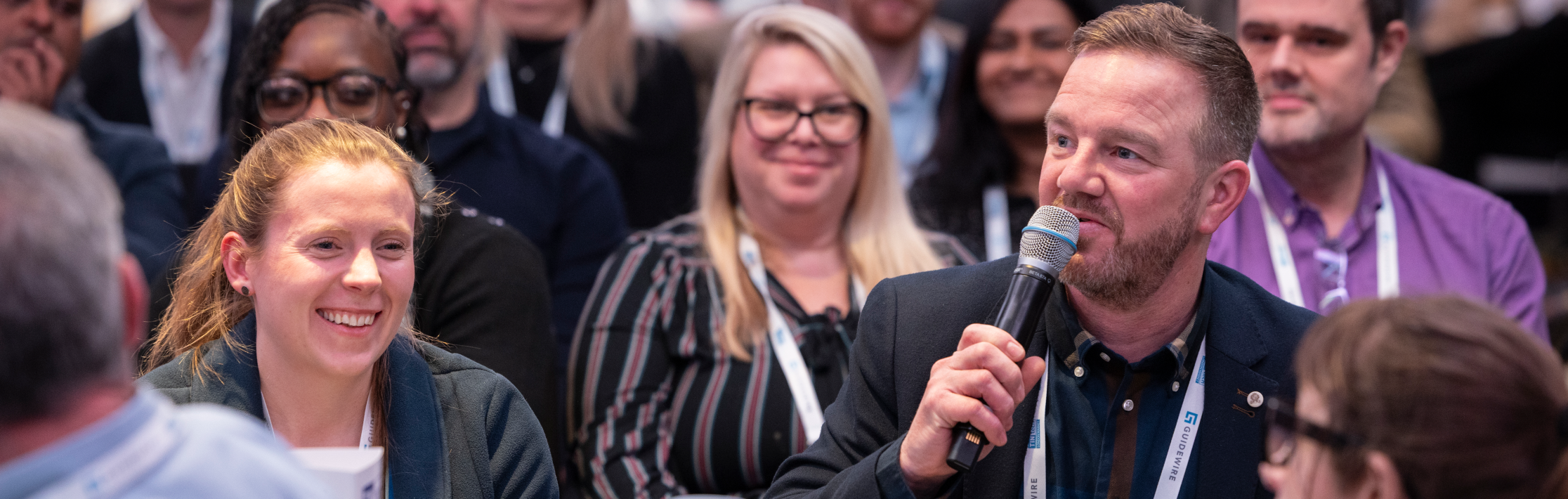
Keynote insights and the organisational journey ahead
LinkedIn Reflections | Christian Kitchen – Blueprint Two, organisational design and AI bedrocks
I delivered a keynote recently on change in the London Market, and the timing turned out to be interesting, coming just before the decision to mothball Blueprint Two. (I promise that wasn’t my doing.)
The conversations since have been some of the best I’ve had in a long time. Thoughtful challenges, strong opinions, and a clear signal that people across the market care deeply about getting this right.
My core arguments were simple:
• Most organisations don’t have a technology problem. They have an organisational design problem
• You can’t centrally design agility into a decentralised market like ours
• Real transformation happens in teams, through sustained capability. It favours products over programmes
• AI amplifies whatever foundations you already have, good or bad
• And if I look at your budget, I can usually tell you your real strategy
Blueprint Two being paused does not invalidate the ambition. It reinforces a harder truth. Market progress depends on firm capability. Central coordination can amplify strength, but it cannot substitute for it.
Grateful to Jeremy Burgess and The Insurance Network for the platform, to Jamie McDonnell for being a terrific co-presenter, and to my fellow panellists Ibrahim (Ibi) El Moghraby and Reno Daigle for a thoughtful discussion.
The conversations since have been some of the best I’ve had in a long time. If you’re reflecting on where we go next, I’d genuinely welcome the conversation.
#LondonMarket #Insurance #Leadership
Data foundations and legacy technologies
LinkedIn Reflections | Christopher Willis – Data foundations, legacy and human factors
Some great talks, conversations and insights at TINtech London Market today.
A lot of discussion about how important data foundations and strategy is, as an enabler for both unlocking value from analytics and insights, but also to ensure that AI strategy and implementation is being done on stable foundations. My favourite quote of the day to reflect this was "you would not try to get Netflix working on a VHS player" I think this is a really good way to look at it.
There was also a lot of focus on legacy transformation and modernisation. One point that I really do believe in came up a few times, the days of treating things like isolated projects that close down with no path to iterating a product or platform are in the past. Technology is evolving at a rate never seen before. If you take the open and shut approach you are creating legacy technology stacks at the point you close the project and stop iterating on them. This just applies a sticking plaster that at some point you will find painful to rip off again.
My final take away is we cannot forget the humans. Whether it be the human in the loop on the process or behaviors and culture that will underpin the success of the data strategy. If we look at the challenges in the market as problems that are solved with a purely technical solution then it will fall at the first hurdle.
A great day with great insights.
.png)
Ensuring analogue artifacts do not delay data modernisation
LinkedIn Reflections | Ian Gatley, Structured data, legacy and mindset
I attended TinTech earlier this week, and two comments stayed with me.
My favourite line of the day:
“Submission ingestion is a solved problem. Pick a platform, or build it yourself in 20 minutes.”
The most depressing, overheard in the coffee queue:
“We ran a three-month process to decide which model to use. Before we could make a final decision, OpenAI released a new version and we had to start again.”
That contrast neatly captures the growing digital divide,not only in the London insurance market, but globally. Organisations and individuals are separating into two camps: those able to internalise rapid technological change and convert it into execution, and those trapped in governance, evaluation cycles, and legacy decision-making models that are no longer fit for purpose.
The divide is characterised not by access to technology, but by mindset, operating model, culture , and data maturity. The winners are learning how to harness untapped potential quickly and safely; the laggards are still treating AI as projects rather than a suite of compounding capabilities.
For me, the most valuable conversations were not about tools, models, or even technology, but about the bifurcation of capacity, with three clear cohorts emerging:
- Leaders – high-touch, expert-led underwriting, but increasingly data-dependent
- Algorithmic (rules-based) underwriting – semi-autonomous placement following predefined rules, executed automatically.
- Portfolio underwriting – think tracker funds for insurance. Small lines on everything, market-average loss ratios, and near-zero marginal cost per policy. Profitability driven almost entirely by expense efficiency.
This is not an or. It is an and. Each plays a necessary role. The net effect should be a more efficient market and better customer outcomes.
But there is a hard prerequisite.
All three models are fundamentally dependent on accurate, digital, structured data. The market’s shared objective must be to digitise data as high up the funnel as possible and keep it structured end-to-end.
At the conference there were credible examples of brokers and carriers working together to digitise the process. However, these still appear isolated rather than systemic.
Collectively, the market needs to take a principled stance: every time we convert structured data back into analogue artefacts, such as PDFs, slips, bordereaux, emails, we reintroduce friction, cost, and error. Each conversion moves us further away from an efficient, truly customer-centric market.
Thanks to Phil Middleton and the #TINtech team for a well-organised event. I look forward to continuing the conversation.
.png)
Embedding AI in London market operations
LinkedIn Reflections | Graham O'Sullivan - The future of AI in the London Market
Takeaways from The Insurance Network’s flagship London market technology conference, TINTech 2026, yesterday:
🚀 AI is *the* agenda topic. It was all-pervasive in every session I attended. This felt less like marketing hype and more like a call to action—backed by examples of enterprises already well along the adoption journey.
⚖️ Split view on benefit realisation. I heard comments about having to suspend expectations on ROI for the first year’s work, yet in other rooms, vendors were demonstrating real-world implementations and measuring cost efficiencies scientifically.
📖 Confusion on terminology. There is a sense that there’s a high bar to entry for business stakeholders needing to learn new terms—the difference between an "agent" and "agentic AI" being a notable example.
One panellist shared a useful bit of framing: they asked us to look at how much the iPhone has impacted every single aspect of our lives over the last two decades, then suggested that AI will be a bigger disruptor than that. Definitely food for thought.
My overall takeaway: The bus has now left the station. 🚌 It is moving slowly, so there is still time for organisations to jump on board, but the momentum is real.
Nobody knows what the AI of three years’ time will look like. However, with the cultural embedding, governance and policy framework deployment perceived to be the "heavy lifting" required to start the journey, the sense was that organisations should be starting to experiment with AI solutions - safely - now.
Better to do this, and learn from mistakes, while it AI is still establishing as a commercial differentiator, rather than waiting until it becomes table stakes.
.png)
AI powered use-cases in practice
LinkedIn Reflections | Monika Delekta-Ebbage - AI powered transformation
I had a fantastic time speaking at 𝗧𝗜𝗡𝘁𝗲𝗰𝗵 𝗟𝗼𝗻𝗱𝗼𝗻 𝗠𝗮𝗿𝗸𝗲𝘁 this week and it was a real privilege to join a panel alongside industry leaders including the Group AI & Data Transformation Director at Aviva, J Penney Frohling and the SVP, D&O Underwriting Manager at Ryan Specialty, Anna Ekström.
The session was expertly hosted by the Global Leader of Risk & Quant Solutions at Evalueserve, Anna Slodka-Turner, who guided a brilliant discussion that brought together perspectives from across the market.
In my talk, I focused on one of my favourite topics: 𝗔𝗜‐𝗽𝗼𝘄𝗲𝗿𝗲𝗱 𝘂𝘀𝗲 𝗰𝗮𝘀𝗲𝘀 and how we turn early success into lasting momentum.
A big part of that conversation was addressing a hard truth: most AI initiatives fail right after the proof of concept stage, not because the models don’t work, but because organisations struggle to bridge the gap between experimentation and production.
I also shared lessons from our augmented underwriting journey at Hiscox, how we moved from PoC to production, the importance of bringing underwriters and stakeholders along with us, and how reusing proven patterns accelerates future delivery. We discussed why building, reusing, and learning from failures is essential to scaling AI responsibly and effectively.
AI transformation is about augmenting expertise, building confidence across the business, and creating a culture where experimentation leads to measurable impact.
Huge thank you to the organisers at #TINtech for bringing together such an energising day of discussion and ideas. I’m looking forward to continuing the conversation and seeing how the market evolves over the next year.
.png)
Adopting and operationalising AI
LinkedIn Reflections | Karthik Srinivas - AI maturity
Last week I had the opportunity to speak at 𝗧𝗜𝗡𝘁𝗲𝗰𝗵 𝗟𝗼𝗻𝗱𝗼𝗻 𝗠𝗮𝗿𝗸𝗲𝘁 𝟮𝟬𝟮𝟲 on realising the potential of agentic AI.
I joined Jamie Wilson and Nicholas Robert for a panel discussion focused on practical implementation rather than hype.
We explored what genuinely qualifies as “agentic” versus an LLM embedded in a workflow, how to select the right use cases/problems, build versus buy decisions, where organisations are comfortable deploying autonomy today, and how governance evolves as multiple agents begin to interact.
A consistent theme across the wider conference stood out.
The London Market is no longer debating whether to adopt AI. It is now focused on how to operationalise it responsibly within complex legacy environments, regulatory expectations, and real commercial pressure.
The hard parts are not agentic capability at all, they are data foundations, accountability, integration, and change management.
The conversation has matured and the focus is now shifting from experimentation to disciplined implementation.
Thank you to Jeremy Burgess and Phil Middleton from The Insurance Network for hosting a strong and thoughtful event.
Good to reconnect with an Oxford cohort colleague, Balazs Fonagy and exchange perspectives.
#Tintech
_1.png)
AI as structural change
LinkedIn Reflections | Justin Albert - Tangible AI solutiuons
Last week at TINtech London Market, I had the privilege of joining a panel on “Reinventing London market business and operating models.”
What stayed with me afterwards wasn’t any single technology or use case, but a broader realisation: AI isn’t a project we “implement”, but a structural change in how work gets done.
One analogy I shared on the panel was deliberately simple. Smartphones transformed what we do and how fast we do it, but they didn’t change how we breathe, walk, shake hands, or tie our shoes. In the same way, AI will dramatically reshape decision‑making, flow of information and speed to action, without removing the fundamentally human elements of our market.
That distinction matters for the London Market.
If data becomes abundant and increasingly commoditised, differentiation shifts. It’s no longer just about access to information, but about:
- How organisations orchestrate that information
- How leaders build trust in AI‑augmented decisions
- And how we redesign career paths when “entry‑level learning by admin” starts to disappear
The most interesting challenges ahead aren’t technical. They’re cultural and organisational:
- How do we train judgment when routine work is automated?
- How do we invest efficiency gains back into learning and experience, rather than simply cost reduction?
- And how do leaders role‑model curiosity and engagement with AI, rather than delegating it to specialists?
The discussion reinforced my belief that the firms who succeed won’t be the ones chasing the latest tools, but those who fix processes first, define clear end‑states, and bring their people along the journey.
Huge thanks to my fellow panellists Marek Shafer, Carys Lawton-Bryce, James Wright, and Anthony Joseph, and to The Insurance Network for creating space to zoom out and talk honestly about what really needs to change for AI to work at scale in our market.
#TINtech #LondonMarket #OperatingModels #Leadership #FutureOfWork #InsuranceTransformation
.png)
The big takeaway: execution discipline is now the differentiator
Perhaps the clearest reflection came from the idea that the market does not lack vision.
What it lacks is coherence, boundary discipline and execution.
Good governance should protect decision quality and flow, not slow things down. Teams should be designed around outcomes, not tools. Modernisation should be treated as an ongoing product evolution, not a start and stop project.
If there was a shared ambition across TINtech London Market 2026, it was this: by 2031, we should not still be talking about data foundations.
LinkedIn posts referenced
James Grafton – TINtech London Market 2026 reflections
https://www.linkedin.com/posts/james-grafton-8066bb1b_tintech-london-market-2026-secure-your-activity-7424900037110976512-fZgj
Send Technology Solutions – Reflections on data, culture and facilitisation
https://www.linkedin.com/posts/send-technology-solutions_tintech-facilitisation-digitaltransformation-ugcPost-7424505730268917761-0j0K
Christopher Willis – Data foundations, legacy and human factors https://www.linkedin.com/posts/chriswillis89_tintech-softwire-londonmarkets-ugcPost-7424497269686849538-4gIM
Balazs Fonagy – Cyborg specialty underwriters and agentic AI
https://www.linkedin.com/posts/balazsfonagy_are-we-ready-for-the-era-of-cyborg-specialty-activity-7424858532879192064-gNjN
Sollers Consulting – Data ownership, cloud modernisation and legacy pitfalls https://www.linkedin.com/feed/update/urn:li:activity:7425079930088103936
Ian Gatley – Structured data, legacy and mindset
https://www.linkedin.com/posts/ian-gatley_tintech-activity-7425171302321233922-hEF9
Graham O'Sullivan - The future of AI in the London Market
https://www.linkedin.com/posts/grahamosullivan_tintech-insurancetech-londonmarket-activity-7424799804808929280-SGH9
Monika Delekta-Ebbage - AI-powered use cases
https://www.linkedin.com/feed/update/urn:li:activity:7425523616810741760/
Karthik Srinivas - AI maturity
https://www.linkedin.com/posts/srkarthik_tintech-activity-7427092568112402433-tNfe
Justin Albert - Tangible AI solutiuons
https://www.linkedin.com/posts/justin-albert-74190b69_tintech-londonmarket-operatingmodels-activity-7427374806028963840-b4JC/
Christian Kitchen - Blueprint Two, organisational design and AI bedrocks
https://www.linkedin.com/posts/activity-7429497291603959808-323a
Sign Up to TINsights
Where we share our latest blogs, industry reports and insights