A deep dive into London market digital trading.
The London market has made significant progress in digital trading over recent years. Electronic placing platforms are now firmly established, brokers are investing in digital workbenches and insurers are increasingly connecting their systems to exchange structured data.
But I think we're now approaching a much more interesting stage in the market's digital journey.
The opportunity is no longer simply to replace paper and email with electronic platforms. It's to fundamentally change how brokers and insurers trade, how underwriting decisions are made and how business flows through the market.
And importantly, there are already examples of this happening.
So what’s next for digital trading and what needs to change to realise its full potential?
1. Moving from electronic placement to data-first trading
For years, the London market has focused on digitising the placing process. While electronic platforms have transformed how brokers and underwriters interact, much of the underlying process has remained document-led.
Information is still extracted from submissions, entered into different systems, checked, reconciled and frequently re-entered further down the insurance lifecycle.
The next stage is about capturing structured data at the beginning of the process and allowing it to flow between organisations without repeatedly recreating the same information.
Marsh provides an interesting example of the progress being made.
According to its published figures, 93% of specialty risks placed from its UK office were digitally traded as at Q2 2026. Its Broker WorkBench enables brokers to submit risks, negotiate terms and bind contracts electronically while connecting with underwriting partners. [1]
This is an important distinction. Digital trading is moving beyond the platform on which a transaction takes place to the quality, structure and accessibility of the data that supports it.
The real opportunity comes when that information can be used throughout the insurance lifecycle, from submission and pricing through to placement, accounting and ultimately claims.

2. Connecting the entire trading process
One of the most interesting examples of what's possible is the collaboration between AXA XL and Marsh.
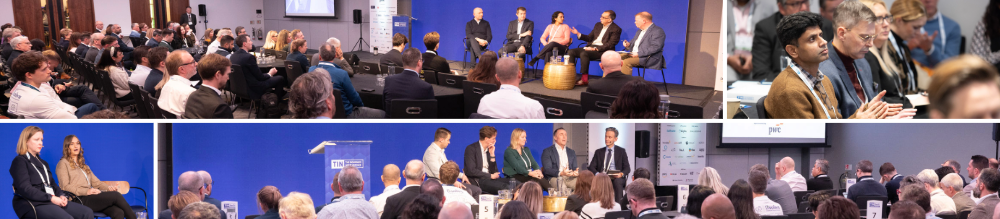
At a recent TINtech London Market discussion, the organisations shared how they have connected their digital placing and accounting processes using structured data, ACORD standards and API connectivity.
Rather than manually transferring information between systems, placing records can be passed directly into the insurer's environment and connected to the subsequent accounting transactions.
The benefits go beyond reducing administration. The initiative illustrates how connectivity can improve information accuracy, reduce reconciliation queries, provide better transaction visibility and accelerate the flow of business.
It also highlights an important point about digital transformation. Not every improvement requires AI.
Much of the operational inefficiency in the London market can be addressed by connecting existing systems, agreeing common data standards and redesigning processes around the information already available.
The AXA XL and Marsh initiative also shows the value of collaboration between individual organisations. Rather than waiting for a single market-wide solution, brokers and insurers can make practical progress by connecting their own operations using common standards.
The question is, how can these approaches be adopted more widely across the market?
3. Digital trading will change the economics of underwriting
Perhaps the most significant implication of data-first trading is what it enables insurers to do with the information they receive.
When submissions arrive as structured data, they can be automatically assessed against underwriting appetite, enriched with additional information and passed into pricing and modelling tools.
This opens up opportunities for faster decision-making and greater automation. It also reinforces the growing distinction between lead and follow underwriting.
For lead underwriters, digital connectivity can provide better information earlier in the process, supporting more effective risk assessment, negotiation and pricing.
For follow business, the implications could be more fundamental. Algorithmic underwriting makes it possible to assess and participate in suitable risks automatically, based on predefined appetite, pricing parameters and portfolio requirements.
This potentially changes the economics of follow underwriting, particularly where large volumes of business can be processed without the same level of manual intervention.
It also creates competitive pressure. As brokers increasingly distribute structured submissions electronically, insurers will need to consider how quickly they can respond and whether their operating models can support automated or near-real-time decisions.
For some classes of business, the ability to respond quickly could become an increasingly important competitive advantage.
However, this doesn't mean every risk should be traded algorithmically. Complex risks will continue to require underwriting expertise, negotiation and relationships. The opportunity is to use digital capabilities to support different approaches to different types of business.

4. Data standards are becoming a competitive enabler
One encouraging development is the progress being made on common data standards.
In October 2026, the London Market Group announced an expansion of the Core Data Record to encompass pre-bind information, claims and delegated authority as well as placement data. [2]
This is significant because it provides a more consistent foundation for exchanging information across the insurance lifecycle.
Combined with ACORD's Global Reinsurance and Large Commercial standards, it creates opportunities for brokers, insurers and technology providers to connect without developing entirely bespoke solutions for every trading relationship.
But agreeing standards is only part of the challenge. Organisations still need to determine how they capture, validate, enrich and use that data within their own businesses.
And data quality remains critical. If incomplete or inaccurate information is introduced at the beginning of the process, greater automation risks moving those problems downstream more quickly.
The next challenge is therefore not simply connecting systems. It is ensuring that the information flowing between them is sufficiently complete, accurate and consistent to support underwriting decisions and automated processing.

5. The biggest challenge may be changing operating models
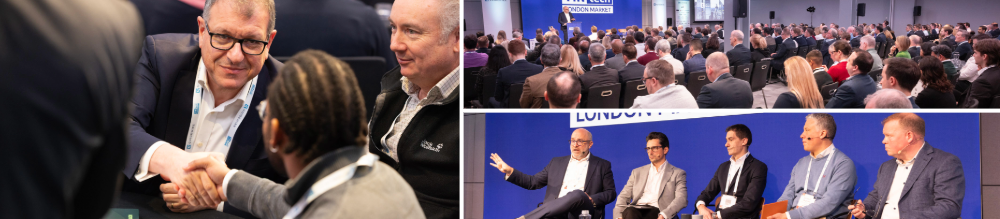
One theme that came through strongly in the TINtech London Market discussion was that the technology required for digital trading is increasingly available. The harder challenge is implementing it.
For brokers, this means changing how information is captured, how risks are presented and how trading activity is managed.
For insurers, it means connecting external trading platforms to internal underwriting systems, pricing tools and operational processes.
And for both, it means bringing underwriting, broking, operations and technology teams together to redesign existing ways of working.
There is also the practical challenge of transition. Not every broker or insurer is at the same stage of digital maturity. Organisations will need to accommodate structured digital submissions alongside email, documents and existing processes for some time.
This makes the approach to implementation particularly important. The experience shared at TINtech London market suggests that starting with receptive business teams, identifying suitable classes of business and demonstrating early operational benefits can help build momentum.
Rather than attempting to transform an entire portfolio at once, organisations can establish connectivity, test new processes and gradually increase the proportion of business traded digitally.
Importantly, the benefits need to be visible to the people using the technology. Giving brokers better visibility of their portfolios or freeing underwriters from repetitive administration provides a practical reason to embrace change.
So where does the market go next?
I think the next phase of digital trading will be defined less by the adoption of electronic platforms and more by what organisations do with the data flowing through them.
The opportunities are considerable:
- Faster submission, quotation and placement processes
- Lower operational costs through reduced rekeying and reconciliation
- Better underwriting decisions supported by structured, accessible information
- Greater use of algorithmic underwriting and portfolio-based decision-making
- Improved visibility of business across the insurance lifecycle
But realising these benefits will require changes to operating models, processes and working practices, not simply investment in technology.
The progress being made by organisations such as AXA XL and Marsh demonstrates what is possible when brokers and insurers work together to address specific operational challenges.
The next question is how the rest of the market builds on that progress. And perhaps the most interesting question of all is whether digital trading will simply make the existing market more efficient or fundamentally change how business is placed, underwritten and serviced.
These are some of the questions we will be exploring at TINtech London Market 2027 in February, bringing brokers, insurers and technology experts together to compare practical experiences and discuss what needs to happen next.
Find out more about TINtech London Market 2027
References and sources
[1] Marsh Risk, “Digital trading at Marsh Risk” (accessed November 2026). Read source
[2] London Market Group, “Core Data Record now spans the full insurance lifecycle from pre-bind through to claims”, 1 October 2026. Read source
Sign Up to TINsights
Where we share our latest blogs, industry reports and insights